

Ontario Premier Calls Trump’s Wildfire Attacks Unacceptable as 1.6 Million Acres Burn
Doug Ford pushed back Saturday against a week of Republican blame aimed at Canada, telling reporters his province would have rushed to help if American forests were the ones on fire.

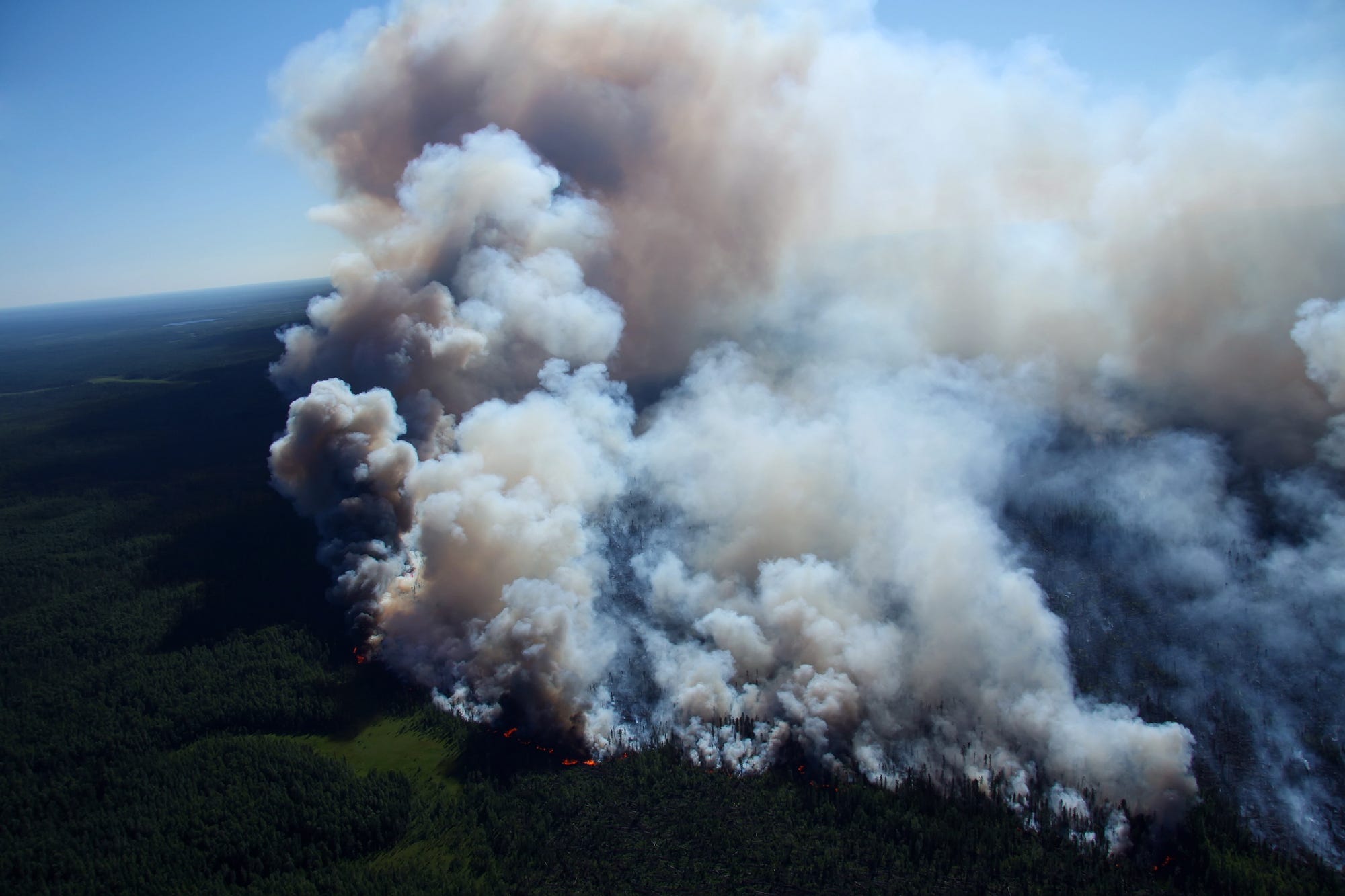
Ontario Premier Doug Ford said Saturday that Donald Trump’s criticism of Canada’s response to the wildfires ripping through his province is, in his words, “absolutely unacceptable.”
Speaking to reporters as crews battled fires across northern Ontario, Ford told Reuters that his government is simply trying to get through the crisis, and that the roles could easily have been reversed. If the United States were burning, he said, “we’re going to be down there to support our neighbors.”
Ford, a Progressive Conservative who spent years cultivating Republican contacts in Washington, put the scale of the emergency at 655,000 hectares of forest, roughly 1.6 million acres, actively burning in Canada’s most populous province.
He said his heart breaks for residents who have lost homes, camps and businesses, and that he has instructed his ministers to treat the response as having no spending limit.
Trump Turns a Disaster Into a Tariff Threat
The premier was responding to President Donald Trump, who used Truth Social on Friday to accuse Canada of failing to maintain its forests and to declare that the United States is being invaded by air he called filthy and dangerous.
Trump went further, writing that the cost of the smoke amounts to willful negligence and must be added to the tariffs Canada already pays, a threat he did not explain in any detail. The White House did not immediately respond to a request for comment on Ford’s remarks.
Ford offered a pointed rejoinder. If the president genuinely wants Canadian forests thinned and cleared, the premier suggested, he could start by lifting American duties on Canadian softwood lumber, an industry whose economics determine how much low-value timber ever gets cut.
Removing those tariffs, Ford said, would resolve a great deal of what both countries are now dealing with. That single observation exposes the incoherence at the center of the administration’s position: Washington has spent years taxing the very industry it now demands do more work.
The Fire Data Does Not Support the Negligence Story
Federal officials reported 69 new fires overnight Saturday, bringing the national total to 955 active blazes. Yet the total area burned this season, close to 11,000 square miles, sits well below the five-year average, a figure hard to reconcile with claims of uniquely reckless Canadian management.
What has changed is the wind, which pushed smoke deep into American population centers and triggered air quality alerts and health warnings across the eastern half of the country.
Roughly 200 fires were burning in Ontario alone this week, and Ford said Friday that 81 of them remained out of control after several smaller blazes merged in Wabakimi Provincial Park and destroyed First Nations communities.
Ten communities had been evacuated by Friday morning. Federal Emergencies Minister Eleanor Olszewski said the Canadian Armed Forces would fly residents out of Fort Hope in the remote northwest, a region with few roads and heavy dependence on air travel.
Climate scientists have been blunt about the underlying cause. Rising temperatures dry out timber and lengthen the burning season, and the risk multiplies as more housing pushes into the boundary between forest and town. Those are the conditions the Trump administration has spent its term making worse, not better.
Congressional Republicans Push Sanctions
Trump joined a chorus that started earlier in the week on Capitol Hill. Four Michigan House Republicans, John James, Jack Bergman, John Moolenaar and Lisa McClain, sent Prime Minister Mark Carney a letter accusing Canada of offering excuses instead of results and warning that the United States would act on its own to protect its people if Ottawa did not manage its forests differently.
The lawmakers also told Carney that sovereignty comes with responsibility, language that reads very differently coming from an administration whose president has repeatedly floated annexing the country.
Ohio Senator Bernie Moreno, a close Trump ally, went further, announcing plans to introduce legislation sanctioning Canada and individual Canadian officials over the smoke. His office faulted Canada for insufficient forest thinning, fuel reduction and prescribed burns, prevention work that American agencies have themselves struggled to fund at scale.
Carney declined to engage the letter directly at a news conference in London, Ontario, but told reporters that fighting climate change is every country’s obligation, the United States included. He contrasted Canadian investment in clean energy with American hostility toward it, including the wind power this president has made a personal target.
Canada Has Been Sending Help North to South for Years
Lost in the Republican messaging is the record of who shows up. Ford noted Friday that Canada sent crews and equipment to California during last year’s fires and to Georgia after hurricane damage in 2024, and he suggested that politicians complaining from a distance could send support instead.
Days earlier, a 56-year-old Canadian pilot named Nicholas Dale was killed while fighting a fire in Colorado.
Conditions may ease shortly. Ontario Natural Resources Minister Mike Harris said fire activity slowed over the past day and that considerably more favorable weather is expected.
The political weather is less predictable. Trump has promised to raise the issue with Carney directly, and Moreno’s bill is due next week, which means an American ally fighting a disaster is likely to spend the coming days answering for the wind.
Democratic Reporter is funded by readers like you, not corporate owners or billionaires. If you value independent political journalism, subscribe and share this piece.