

Speculation is rife across the United States about why flights are grounded nationwide. The Federal Aviation Administration is, at this time, only citing a “communication issue,” and there’s not much information coming from the U.S. government.
Meanwhile, social media sites are flooded with people posting that they’re stuck on planes halted on runways, or trying to figure out a way to reach their destinations, and it’s entirely unclear when this could come to an end.
With no official word on the cause, everyone is making guesses, ranging from political reasons to malfunctions of recently-upgraded AI systems.
FAA Announces All Flights Halted
On the evening of Friday, November 13, the FAA released a statement affirming that all flights are halted out of an abundance of caution, and citing a temporary telecommunications outage.
Across social media, speculation began: could it be due to terrorist activity? Recently-installed AI systems malfunctioning? Could it be an intentional stoppage for political reasons?
Though terrorism, AI, and political intimidation are all at the forefront of many minds currently, there’s no specific evidence publicly available to support any of these at this time.
What Is The Government Saying?
So far, there’s not a lot of data released on the reason all flights are grounded, and some official statements seem to hint that the cause isn’t actually known.
The FAA has cited an unspecified telecommunications issue, and Secretary of Transportation Sean Duffy has promised “immediate updates” as they’re available — but so far, those updates don’t seem to be forthcoming.
“The Federal Aviation Administration issued a nationwide ground stop for all U.S. airports following a communication issue impacting all Air Route Traffic Control Centers. FAA technicians are investigating the issue. We will provide immediate updates as we have them.”
As of this writing, Donald Trump has not addressed the issue, though the White House Facebook account has shared Duffy’s post.
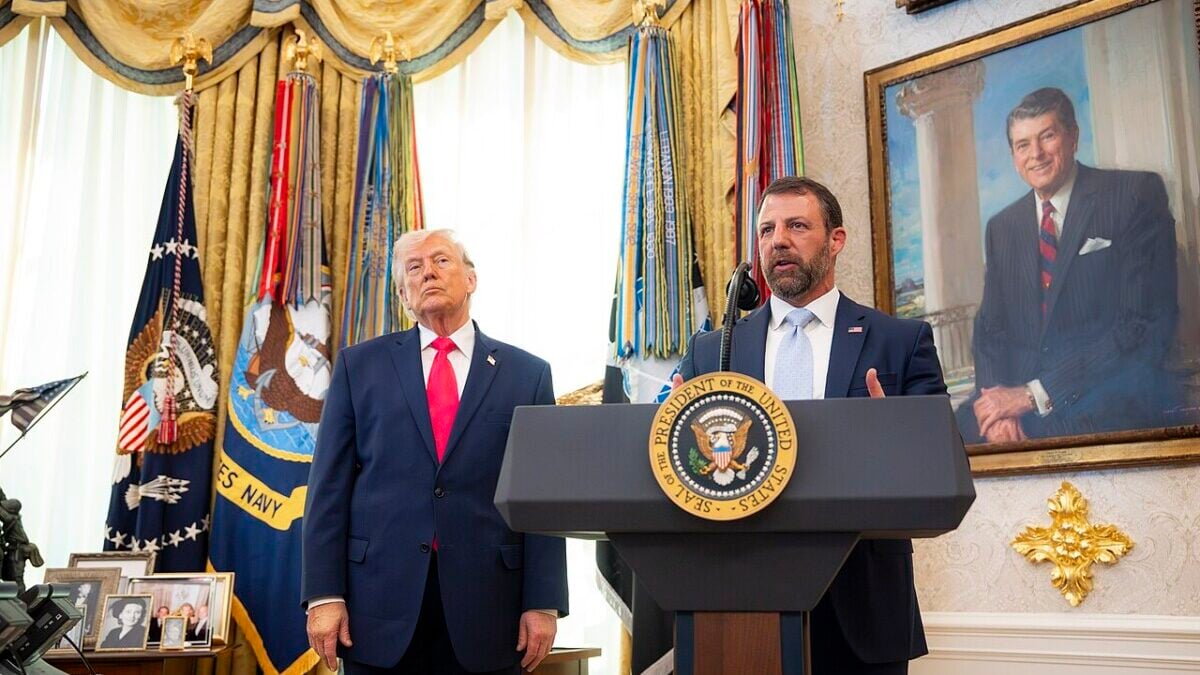
Secretary of Homeland Security Markwayne Mullin has released a vague statement, promising those who have loved ones on flights that they are safe and there is no cause for concern. He says that “you’ve always got to assume” that a cyber attack of some sort is a possibility, but that at this time that’s isn’t known.
He says that for now, the plan is to find the root of the problem and fix it, and then air travel can be restored.
Travelers Safe, But Struggling
While passengers and would-be passengers are reportedly safe, it’s clear that they’re suffering more than a little inconvenience. Parents have posted on social media about sitting with toddlers on grounded flights for extended periods of time, and the New York Times reports that airline customers who already had baggage checked are now stuck in lines hoping to collect their belongings again before making alternative travel plans.
It’s not clear at this time whether any passengers on grounded flights have been released.
While most people aren’t exactly excited to spend extra hours of uncertainty in an airport or on a plane, the majority will only be suffering inconvenience. It’s also not clear whether any with more urgent travel situations are able to access alternative accomodations.
Contradictory & Vague Reports
Though Secretary Mullins and NORAD have both confirmed that there’s currently no evidence to point to terrorist activity, the possibility is still garnering interest on social media, with very polarized and politicized speculation about the reasoning behind a hypothetical attack.
Meanwhile, reporter Jacob Gardenschwartz says that air traffic controllers, too, are relying on word of mouth and textmessage chains to try to learn what’s going on. He says that his source first recieved notice of a single stoppage on the east coast, followed by two more control towers suffering the same problems, then the nationwide stoppage.
He adds that his source says some towers seem to be functioning, which supports the explanation that a nationwide shutdown is more about an abundance of caution.
The Artificial Intelligence Question
Markwayne Mullin may insist on calling it “SI,” standing for “superior intelligence,” in deference to Donald Trump’s recent statements, but anyone who has so much as glanced at an AI overview in search results knows that the programs can make monumental mistakes without sufficient human oversight.
As it happens, Gizmodo just reported on Thursday that new AI systems were being more widely implemented in air traffic control. At the time, the FAA issued assurances that this would not make air travel less safe, and that it would only be allowed to recommend new routing based on weather patterns, flight paths, traffic, and more, with a team of experts in DC validating the findings, then passing them on to air traffic controllers, who would still be left to make final decisions.
Despite this oversight, there’s speculation that the new tech could either have caused the problems, or exposed vulnerabilities to outside damage.
What Should Travelers Do For Now?
Seek alternative travel options if possible. Don’t be surprised if it’s very difficult to get through to airline staff by phone, since there are more than a million other travelers with many of the same questions you have.
If you’re in the airport, try to maintain patience with staff. They’re not at fault for this, and they’re dealing with a lot of angry and frustrated people.
Mullin indicated that it could be an extended period of time before flights are active again. When that does happen, there will likely be a rush of people trying to make up their lost time, so don’t expect things to go smoothly right away.
Current Department of Transportation rules require that if a flight is cancelled, tickets must be refunded within a certain time frame, if the passenger doesn’t accept vouchers or an altered flight time.
“A refund is due within 7 business days after you reject an offer if you paid for the ticket with a credit card, and within 20 calendar days after you reject the offer if you paid for the ticket with another form of payment, such as a check or cash.”
For now, it’s wisest not to tie up phone lines with questions about these refunds, but do make contact if you don’t hear from your airline after the issues are resolved.