

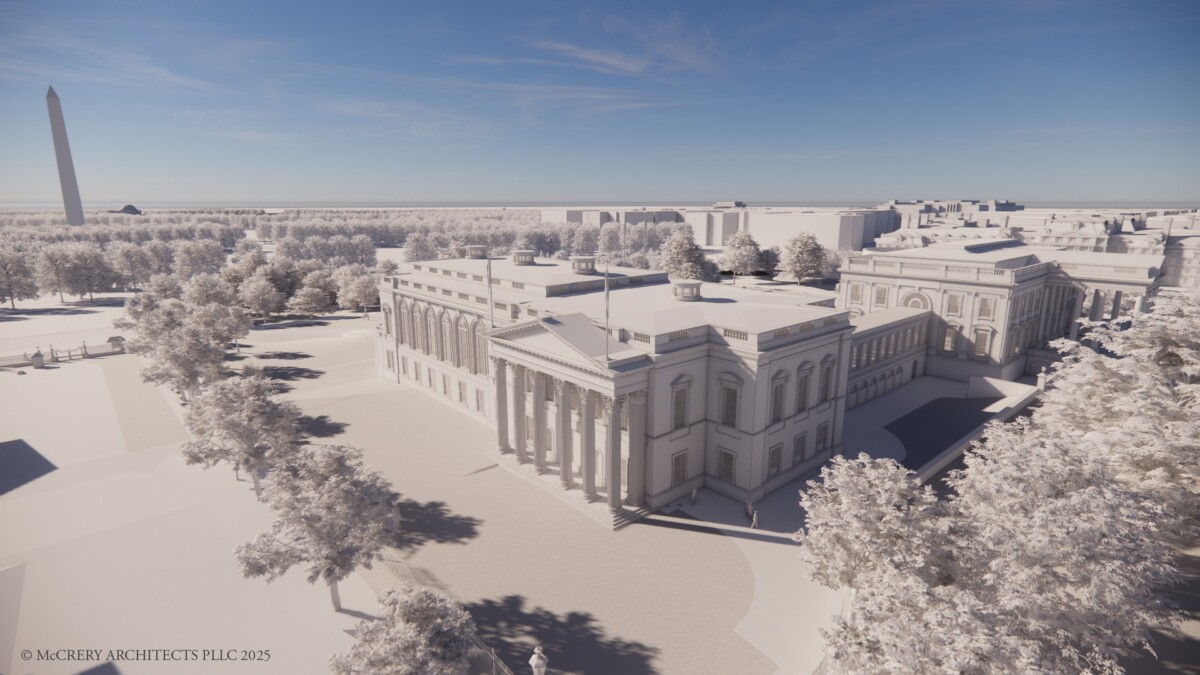
Donald Trump’s White House ballroom has been a contentious project from the start. The funding has been questioned; there have been concerns about the damage to the White House; and earlier this year it was revealed that the project is much more militarized than the average party room.
Now, details of the funding have been revealed, and the “private donations” come predominantly from corporations and individuals who could potentially benefit from Trump’s favor.
Documents obtained by the Washington Post include a list of donors, including more than $100 million in funds from major tech companies, and millions more from companies involved in financial services, healthcare, media, and more. From crypto companies, the project has seen about $18 million.
There’s no documentation directly linking the donations to any rewards or favors. However, many of them do come from companies and individuals who have benefitted from Trump’s position.
Donors Appear To Be Receiving Special Treatment From The Trump Administration
For instance, the documents show that Joseph Popolo Jr. and his family made a million dollar contribution to the ballroom project two months after Trump appointed him as Ambassador to the Netherlands.
On a larger scale, tech giant Nvidia, struck a deal with the Trump Administration to permit the company to sell microchips to China, over concerns about potential national security issues. A CEO said that the company would be contributing to the ballroom “in a small way.” Now the new documents reveal that in fact, Nvidia donated $25 million to the project, and asked to keep the donation anonymous.
Nvidia has responded to the document release, saying that the company is proud to support “a nonpartisan trust that serves all Americans,” and that this is “independent of any business interests.”
Other major tech companies that show up in the list include Apple ($25 million); Google ($22 million); Amazon ($5 million), and Meta ($5 million). Notably, the documents do not show Trump or his companies directly funding the project, despite the fact that he’s claimed to be one of the funders.
Trump announced the building of the ballroom in the summer of 2025, just months after retaking the White House following the 2024 elections. Immediately there was backlash: people raised concerns about the funding, the massive changes to the longstanding historic building, and whether the ballroom might be a cover-up for other changes.
The Ballroom Quickly Morphed Into A Mixed-Use Military Complex
Sure enough, by January, CNN was reporting that existing top-secret bunker space beneath the White House was also being altered during the construction, and that details of the changes were not being released.
Months later, Trump himself boasted about the more militarized and underground aspects of the project, from a military hospital in the six-story subterranean complex to the drone base on the roof. At this point, Military Times reports, Trump also made a push for Congress to approve taxpayer funding to support the construction.
Security is a clear necessity for the building in which the nation’s top executive resides, works, meets with other government officials, and hosts visiting leaders from other nations. However, the degree of change, and the level of secrecy about it, has raised additional concerns, particularly after the chaos and violence that occurred at the end of this president’s previous term in office.