

Picture a federal courtroom in Boston on Thursday afternoon. Judge Indira Talwani is asking the Trump administration’s lawyer what should be the easiest question in the world. The Postal Service is supposed to switch on a brand-new system that will control how mail ballots are delivered this fall. So, does it work? Is it even turned on?
And the Justice Department lawyer couldn’t tell the judge whether it was operational. The judge asked whether the government was essentially running an experiment on a live national election. Then she summed up what the government had shown her about how this system will actually function: “I don’t have it. I have nothing.”
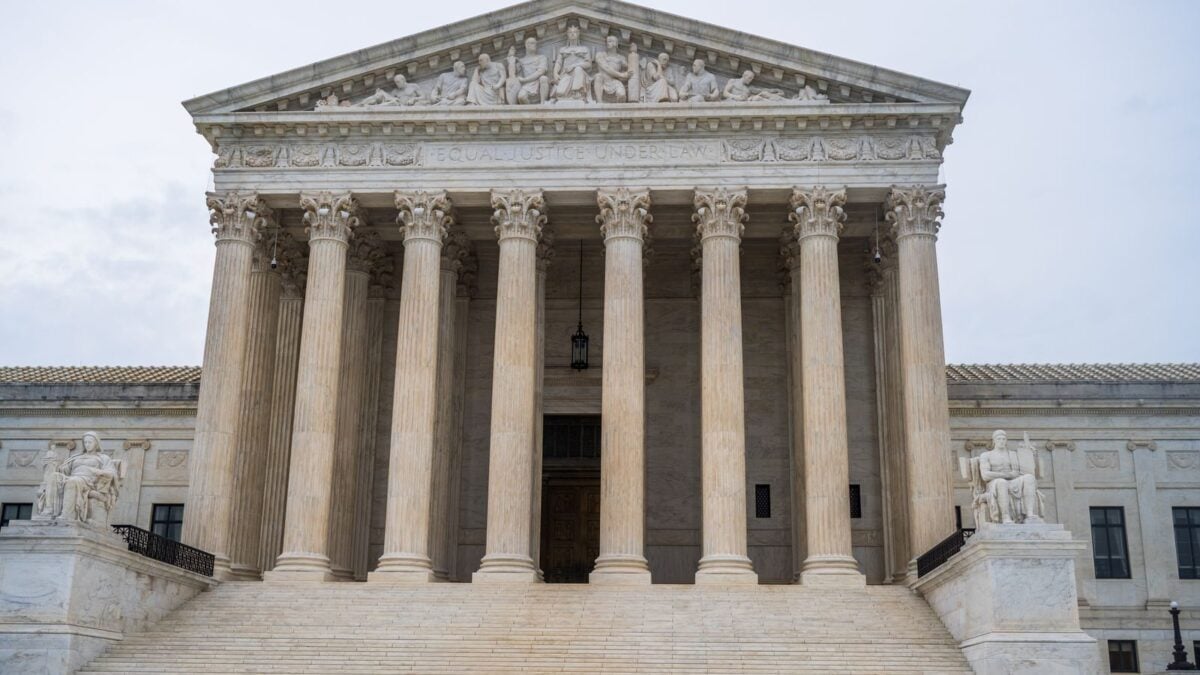
Hours after that hearing, that same administration raced back to the Supreme Court demanding that the justices sweep the lower court out of the way. Not after a trial. Not after the appeals court finished its work. An emergency demand, on the shadow docket, while the actual litigation is still playing out in the courts below.
And the timing isn’t subtle. The filing landed one day before the first mail ballots of the 2026 midterms go out. North Carolina officials kick off the voting season by mailing the first absentee ballots to voters today. As of this morning, voting in this election has begun.
So let’s talk about what Donald Trump is actually asking for here, because it is genuinely wild.
Back in March, Trump signed an executive order about mail voting. By the time it reached the justices this summer, the fight centered on three provisions that tell you everything about the project. The Department of Homeland Security builds federal lists of eligible voters and hands them to the states. The attorney general is told to prioritize prosecuting state and local election officials who send ballots to people the administration decides were ineligible. And states must give the Postal Service a list of every voter they plan to send a mail ballot to, because the post office would be barred from delivering ballots to anyone not on its approved roster.
Gatekeeping Mail-In-Ballots Using The USPS
Read that last one again. The United States Postal Service, the agency whose entire job is delivering the mail, would be instructed not to deliver certain mail. Specifically, ballots. Specifically, in a federal election.
In August, the Postal Service published its rule for making this real. States upload the names and addresses of their mail voters into a new federal portal. Ballot envelopes get mandatory new barcodes. And if a state declines to play along, USPS says it will not deliver that state’s ballots at all.
Now, when the administration talks to the justices, it all sounds so reasonable. Solicitor General John Sauer describes modest envelope and addressee requirements- nothing to see here, the same way the post office sets rules for mailing cremated remains and replica explosives. That is a real comparison the government made, in writing, about your ballot. He has also assured the justices that the Postal Service will still carry the ballots voters send back, even if a name is missing from some list. Follow that carefully. They say the ballot you mail back will be fine. The federal government now reserves the right to withhold the ballot coming to you.
A USPS Whistleblower Says The System Is A Disaster
Here is where this stops being a legal abstraction. On Tuesday, we learned that somebody inside the federal government has been watching this system get built, and that person is alarmed. A federal official came forward through the nonprofit Whistleblower Aid to warn that the Postal Service tossed aside basic best practices while racing toward a September 1 launch, and the disclosure asks openly whether a breakdown here would be “a feature rather than a bug.”
The details, laid out in a disclosure sent to Senator Richard Blumenthal, get worse the closer you look. Three brand new IT systems stood up all at once, in the middle of an election year. A portal that USPS did not start building in earnest until June, giving itself less than three months for the kind of project that normally takes far longer. Testing was skipped to hit the deadline. And a design so rigid that a single flawed barcode can get an entire batch of ballots kicked back to the state to fix, with the clock running the whole time.
The whistleblower calls the effort “rushed, chaotic and fundamentally flawed” and warns that failure here would not be a paperwork problem. It would mean eligible voters waiting on ballots that never arrive. Blumenthal has a shorter word for what he believes is happening at the post office: “sabotage.”
The Whitehouse Says The USPS Software Isn’t Complex
The White House says everyone should relax. A spokesperson insisted the software involved is “neither complex nor unique for USPS,” which is an interesting thing to say in the very same week the government’s own courtroom lawyer could not vouch that the system exists in working form. The Postal Service says it is reviewing the whistleblower’s claims.
Which brings us to the why. Why is the President of the United States burning emergency Supreme Court capital, in September, to grab control of ballot delivery in November?
The Entire System Is Built On Trump’s Disproven Election Fraud Claims
His answer is the answer it has always been: fraud. Noncitizens voting by the thousands. Except every serious attempt to find that fraud keeps coming back empty. Study after study and audit after audit have found noncitizen voting to be vanishingly rare, and Trump has himself voted by mail in Florida while telling the rest of the country the method cannot be trusted.
And you do not have to squint at the history, because the receipts are extensive. After 2020, Associated Press reporters reviewed every potential fraud case in the six battleground states Trump disputed and found fewer than 475, out of 25.5 million ballots cast. Not 475 proven cases. Fewer than 475 potential ones, amounting to 0.15% of Joe Biden’s margin in those states, with no coordinated scheme anywhere, mostly lone individuals trying to vote twice and getting caught because the system worked. Republican governors certified those results. Courts threw out the challenges. The fraud was never there.
So the fraud has been checked, rechecked, and disproven, yet the machinery being built in response is very real, very rushed, and aimed squarely at how millions of Americans vote. Lawyers at the Campaign Legal Center have been warning about this dynamic for months: a federal government that keeps the master list of who counts as a voter has enormous power to shape its own electorate.
U.S. Courts Are Noticing Trump’s Voting Interference Patterns
The courts have noticed too, even the ones ruling in Trump’s favor. When the Supreme Court let key provisions move forward in August, over the dissent of all three liberal justices, the unsigned majority went out of its way to note that nothing in its ruling blessed whatever the government might actually do with these powers. On whether the implementation is lawful, the Court shrugged, “time will tell.”
Well, time is telling. The Postal Service rule came out; Judge Talwani looked at what implementation would actually mean for the 23 states suing, and she hit pause with a restraining order that runs out in days. The administration’s response was not to show her a working system or a credible plan. It was to run past her, back up the marble steps, and demand the justices clear the road one day before ballots hit the mail.
If the Supreme Court says yes, an untested federal chokepoint gets bolted onto ballot delivery while voting is already underway. If a batch of ballots bounces in October because a barcode misfired, those are real voters in real races who may simply never receive a ballot. And the man who ordered all of this built has spent years telling you that mail voting is fraudulent without ever once proving it.
That is not election security. That is a president reaching into the mail stream in the middle of an election, and the only things standing in the way right now are a judge in Boston and a clock.
Democratic Reporter will be tracking what the Supreme Court does next, because whether your ballot shows up in your mailbox this fall should never depend on whether a rushed government portal is having a good day.