

Autism disinformation has a long history, but it’s currently having a significant resurgence. An observer can easily make some connections between some of the false or unproven claims and their sources, but a new survey goes into deeper detail, finding out exactly how much political leanings and other factors coincide with disinformation.
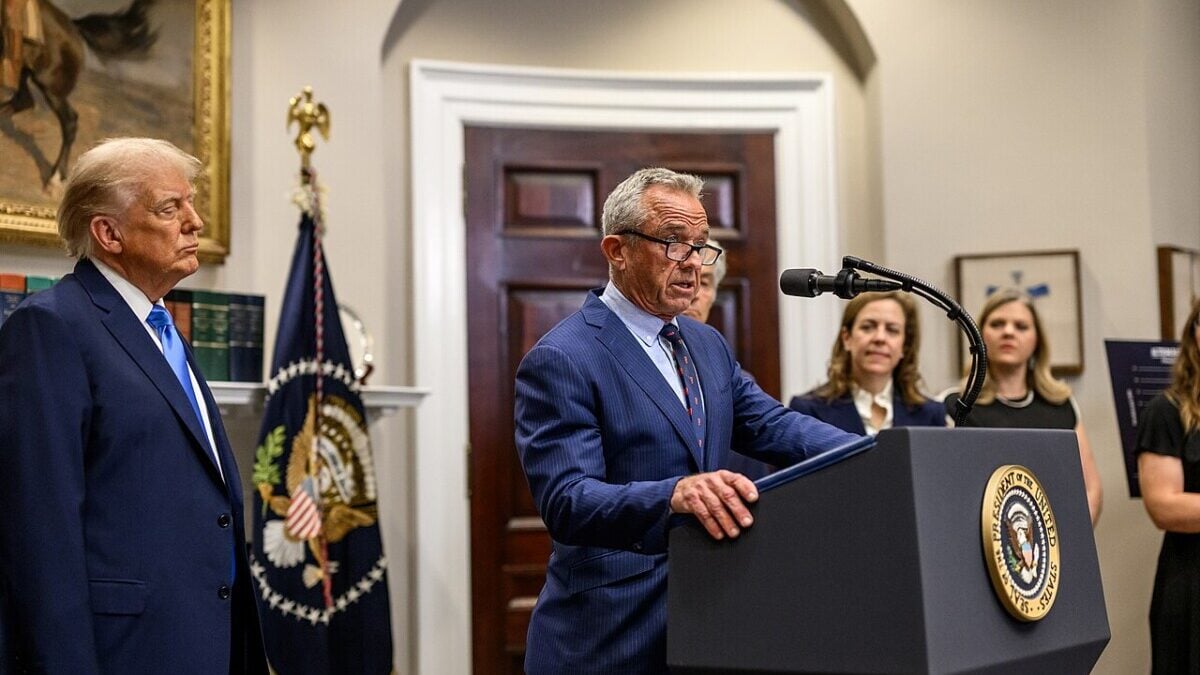
The study did focus primarily on two specific false claims that have been made by political figures. Donald Trump and Secretary of Health Robert F. Kennedy Jr. have both implied or claimed that a link has been demonstrated between childhood vaccines and autism, and that a link has been demonstrated between a mother’s use of Tylenol during pregnancy and the child’s later development of autism.
Neither claim is supported by the evidence, but about a quarter of Americans has accepted each.
The Political Factor In Tylenol Disinformation
Donald Trump has repeatedly mentioned views on autism and the causes thereof that do not match evidence from scientific investigation. For instance, in a September 2025 press conference, he claimed that taking Tylenol during pregnancy is extremely dangerous, and that it’s also harmful to give kids Tylenol, particularly after their vaccinations.
“Acetaminophen…which is basically commonly known as Tylenol during pregnancy and can be associated with a very increased risk of autism…And you shouldn’t give the child a Tylenol every time he’s born and he goes and has a shot. You shouldn’t give Tylenol to that child.”
Multiple times during this speech, he muses about exceptions, which he describes as times when a woman has a fever and can’t “tough it out,” and resorts to Tylenol, emphasizing that in these cases, she must do so sparingly.
Medications taken during pregnancy can affect a fetus, and an early prenatal appointment often includes a list of medications that are considered safest for pregnancy, and those that should be most strenuously avoided. However, doctors also emphasize that there are other dangers to an unborn baby, such as maternal stress or illness. An untreated fever can do measurable, proven harm to a fetus, and Tylenol is considered one of the safest medications during pregnancy.
The American College of Obstetrics & Gynecology explains that acetaminophen (often sold under the Tylenol brand name, but also in generics) is safe during pregnancy.
“You may have heard claims about acetaminophen being linked to autism or attention-deficit/hyperactivity disorder (ADHD). This has not been proven by science. The highest-quality research studies show there is no evidence that acetaminophen causes autism.”
The Trump Effect
The study, published in the Journal of the American Medical Association, finds that people who said they place a lot of trust in Donald Trump were more than 4 times as likely to believe that vaccines and/or Tylenol is a major causal factor in autism.
Those who reported a high level of trust in Trump were also less likely to believe that genetics play a role in autism, despite longstanding clear evidence that it is the most significant factor. In fact, UCLA’s David Geffen School of Medicine says that about 80% of all cases of autism can be directly traced to genes inherited from parents.
It’s not only Trump, either — the study found that those who considered themselves strong Republicans were more likely to believe unsupported claims about causes of autism. The study notes that last fall, there was similar, but less firm, correlation between political leaning and acceptance of the false claim that Tylenol causes autism.
“Similar to surveys on vaccination, a Kaiser Family Foundation survey in the fall of 2025 suggested uncertainty among US adults—although only 4% said it was definitely true that taking Tylenol during pregnancy increases autism risk, 30% said it was probably true. In that survey, Republicans were substantially more likely than Democrats to view the claim as true (56% vs 13%).”
Science And Social Media
It’s not surprising that individuals who expressed a high level of trust in science and medicine were less likely to believe that autism is caused by unproven factors like vaccines and Tylenol.
However, the study notes this relevance because overall trust in scientific and medical institutions decreased during COVID-19, which seems to have been a catalyst for a sudden increase in distrust of childhood vaccinations and other aspects of healthcare.
The study did find one correlation that may be surprising: those who spent more time on social media were actually less likely to hold beliefs that contrasted with scientific findings on autism causes.
Those who said they used social media less than once per week were more likely to believe the false claims about Tylenol and vaccines, while those who reported higher social media use were less likely to hold these beliefs. The study did not seek to identify the cause of this correlation, but it’s worth noting that in the immediate aftermath of Trump’s press conference, many medical and scientific experts did turn to social media to explain why the claims were unsupported by fact.