

While individual Americans take a wide range of positions on both the morality and appropriate legality of abortion access, fewer of those positions cluster at the extreme anti-choice end of the spectrum than recent political activity might suggest. As a result, when seeking votes, politicians who take these more extreme “no abortion, no exceptions” stances tend to water their positions down for their audiences.
Senator Jon Ossof (D) took the opportunity to demonstrate this Tuesday night during a debate in Georgia, where he put the spotlight on his Republican opponent’s wavering policy statements.
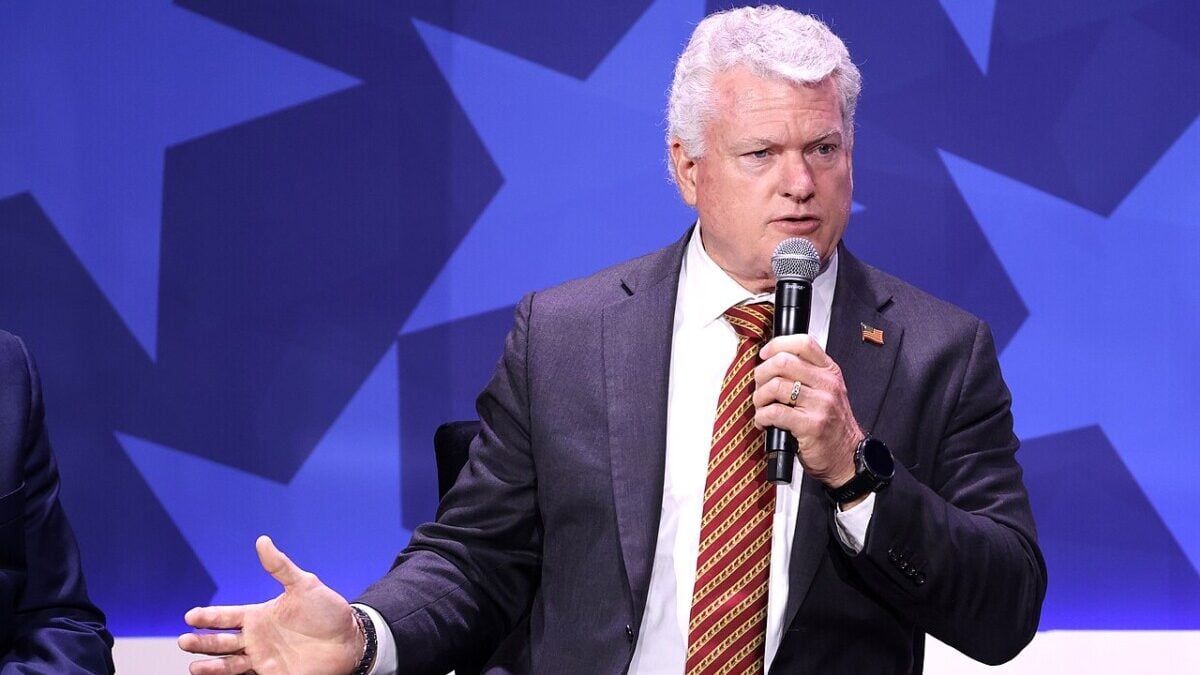
Ossoff called out Mike Collins, who has said in the past that he is “100% pro-life, no exceptions.”
Collins tried to dodge, saying that while he’s pro-life, he believes “the Georgia legislature got it right” by passing an abortion ban that left exceptions to save the life of the mother, and in cases of rape and incest. Instead, he argues that Ossoff is the one with an extreme position, falsely claiming that Ossoff supports abortion even after birth.
So, what’s the truth? What does one see when that footage rolls? It’s Collins, in a 2022 debate, declaring himself to be against abortions, with no exceptions.
In fact, Collins took such a hard-line stance against abortion access that the current president questioned whether it could cost Republicans the election in Georgia. (For those keeping track, yes, this is the same president who, as a candidate, said that women should be punished for receiving an abortion; then later walked that back and said it should be left to the states.)
Sure enough, Collins has followed Trump’s example by trying to (at least in speaking to voters) soften his stance.
MSNow noted the softened stance back in June, when Collins publicly embraced the so-called ‘heartbeat law,’ which would ban abortion after a heartbeat is detectable in the fetus, and has exceptions for medical necessity, as well as for rape and incest victims.
This all comes as there is increased scrutiny from watchdog groups that argue the overturning of Roe v. Wade and the enacting of strict abortion legislation in several states has resulted in the unnecessary deaths of many women. ProPublica notes that states that have enacted these laws tend to track deaths in a way that makes it difficult to demonstrate clearly how many could have been avoided if not for delays or denials of treatment, but there are some specific examples that stand out, including at least one in Georgia:
“Amber Thurman suffered for 20 hours while sepsis spread.”
In many of these cases, the abortion may be accessible under the state’s exceptions, but the strict legislation results in delays in medical care that do harm to the patient, sometimes fatally.
In fact, Pew Research polls show that a majority of voters (60%) believe abortion should be “legal in all [or] most cases,” and even among Republican voters, more than a third (36%) say the same.
With that in mind, it’s no real surprise that candidates would want to soften their stances ahead of an election. This leaves voters to ask, though, which of these teetering stances their candidate will take when it’s time to vote on legislation.
Collins is, incidentally, a co-sponsor of the Life At Conception Act, which reads as follows:
“This bill declares that the right to life guaranteed by the Constitution is vested in each human being at all stages of life, including the moment of fertilization, cloning, or other moment at which an individual comes into being.”
That text doesn’t bode well for exceptions if this bill passes into law.