

Congressional Republicans realize that the midterm elections are a clear message on leadership and the current state of the nation. Americans are saying they’re sick of the current circumstances, from the prices of gas and groceries to the state of international relations and health care access.
However, they’re also entirely unwilling to put any of the blame on Donald Trump (who is also unwilling to take any), despite his campaign of pleading with voters to pretend he’s on the ballot.
In a few weeks, they’ll lose control of Congress, but they’re still shielding their president.
Even Before The Votes Were Tallied, Republicans Knew
Throughout early voting and as exit polls came in, Republicans knew there was a problem, even if they didn’t know how the final tallies would land. They were aware that people were voicing frustration with high prices and hardships.
Some will even admit it, if they can do so anonymously. One GOP strategist reportedly told Axios that the outcome would be all about Trump.
“It’s Donald Trump’s midterms. He gets all the credit if we win. He gets all the credit if we lose.”
Meanwhile, Trump held rallies that seemed to shine a spotlight on every failure and flaw, both in his Administration and in himself. Protestors showed up, and Trump praised his fans for commiting acts of violence against them. He went viral for incidents in which he seemed to struggle with speaking, and for rants that seemed irrelevant to the election.
As he did so, he associated himself with each candidate, and reminded voters to “pretend that [Trump is] on the ballot.”
So, Who Are Republicans Blaming?
In the Senate this week, Republicans debated whether to move forward with choosing leadership. They discussed the possibility of replacing Majority Leader John Thune (soon to be Minority Leader) with someone else. According to Roll Call, Senator Josh Hawley was willing to admit that sticking with the same leadership after a significant loss might not be the ideal choice.
“I will vote for the delay,” he said. “We’ve got a lot of things that we’ve got to think through, and I think to rush into this and to just ratify all the same leadership — I mean, what message does that send?”
However, no other candidate stepped forward to challenge Thune for the leadership position, and by the end of the day, Thune was re-elected as Republican Leader.
In the House, Republicans did choose to try a change, replacing Steve Scalise with Jim Jordan, suggesting that perhaps they do believe Congressional leadership carries at least some of the blame.
What Are Republicans Saying About Trump?
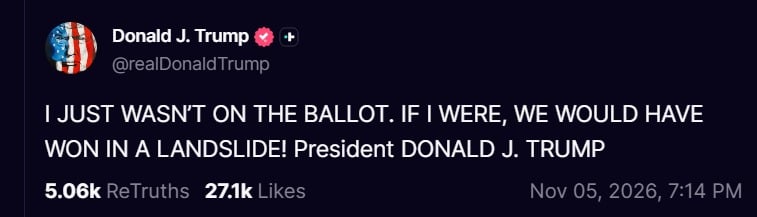
In public, Congressional Republicans aren’t saying much at all about Trump’s role in the party’s losses. Trump himself posted on social media to distance himself from the loss, declaring, “I wasn’t on the ballot!”
According to Puck News, exactly three Senators were willing to mention Trump’s name at all in discussions of blame, and all three may already feel they have nothing to lose.
“Only three senators actually brought up Trump: Susan Collins and Jon Husted, both of whom lost their reelections, and Rand Paul, who is already on Trump’s blacklist for opposing tariffs and executive overreach.”
What Does This Mean For The American People?
If this election was a referendum on Trumpism, as it has been widely characterized, these elected officials are telling their voters that they don’t plaan to change.
The message being sent is that Congressional Republicans will choose Trump over their voters, and that may not sit well with people who are already tired of gas prices, grocery prices, and other hardships associated with the current leadership.
While Democrats will now be in the majority, it’s not such a strong majority that they can force legislation through without support from at least some Republicans, and perhaps voters can take this continued protection of Trump as a message that more seats will have to flip before we can see any real change.