

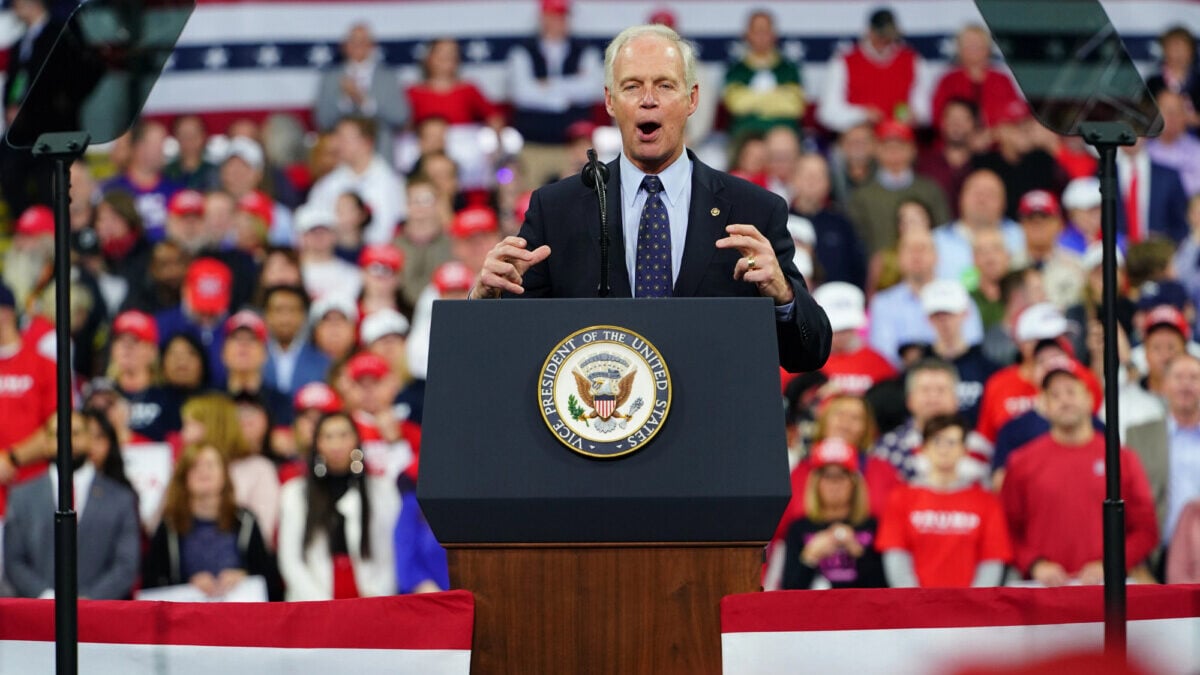
The Senate Budget Committee chairman called Social Security a Ponzi scheme and a scam hours before chairing a hearing on its future, and now insists the problem is context.
Senator Ron Johnson of Wisconsin claimed on Wednesday that he was “taken out of context” after Senate Democrats confronted him over his call to shut down Social Security. The context is not in dispute. Johnson, who chairs the Senate Budget Committee, made the remarks himself, on camera, during a Fox Business appearance just hours before he gaveled in a hearing on the program’s future.
In the interview, Johnson declared there is “really no way to fix Social Security,” called the program a Ponzi scheme, and said the answer is to “just shut it down and hope that you can recover some of your money.” He also described Social Security as a scam that cannot be reformed, language Senator Ben Ray Luján later read back to him at the hearing, including Johnson’s own declaration that the program “is grotesque.”
Democrats Read His Own Words Back To Him
Senator Mark Warner of Virginia told Johnson he was “shocked and disappointed” by the morning comments, then quoted Johnson’s words back verbatim from the dais. Johnson interrupted to insist the remarks had been taken out of context. Warner was not having it. “I’m reading a quote from you on Fox News!” the Virginia Democrat shot back, calling the comments “outrageous.”
Johnson’s defense was that he “was talking about Ponzi schemes” in a general sense. Warner closed by telling the chairman to stop “scaring Americans to make political points” on television.
Senator Ron Wyden of Oregon said it was the first time in decades that a Budget Committee chairman “said he would rather shut down Social Security than fix it.” Senator Jeff Merkley warned that this kind of rhetoric frightens the people who depend on the program, telling the hearing, “That does terrify people.” Senator Tim Kaine put it even more simply: “Ponzi schemes are bad. Respecting your elders is not bad.”
A Walk Back That Collides With His Own Record
By the end of the day, Johnson had conceded his wording was imprecise and insisted he is not actually proposing to shut the program down, according to analysis from MS NOW. Yet he repeated the Ponzi charge on Newsmax that same day, and he opened the Budget Committee hearing itself by branding Social Security a legal Ponzi scheme in his remarks from the chair.
The defense also collides with more than 15 years of Johnson saying exactly this. He has characterized Social Security as a Ponzi scheme since his 2010 campaign, a claim fact checkers have repeatedly rejected across more than a decade. In 2022 he proposed moving Social Security and Medicare into the discretionary budget, which would have ended guaranteed automatic benefits, and in 2023 he lamented that the program was never privatized.
The Ponzi label itself does not survive scrutiny. Social Security is a public insurance program with benefits defined in law, funded by payroll taxes from current workers; it is not a fraudulent investment scheme designed to enrich its operators. Bill Sweeney, who leads government affairs at AARP, said Johnson’s description is out of touch with the way the American public understands the program.
What Shutting It Down Would Actually Mean
The program Johnson talks about like a crime scene faces a real deadline. Its primary trust fund is projected to run dry in 2032, triggering an automatic 22% benefit cut for every beneficiary if Congress does nothing. That is the problem a Budget Committee chairman is supposed to be solving.
Democrats at the hearing argued the shortfall can be closed without cutting benefits by raising the cap on income subject to the payroll tax, so the wealthiest Americans contribute on more of their earnings. Johnson’s answer, in his own words on Wednesday morning, is to shut the program down and hope people recover some of their money.
Johnson is up for reelection in two years in a state that recently voted Democratic, and his retreat comes as congressional Republicans absorb this month’s midterm rebuke from voters. He said what he said, on camera, more than once, over more than a decade. His colleagues heard him the first time, and so did the voters.