

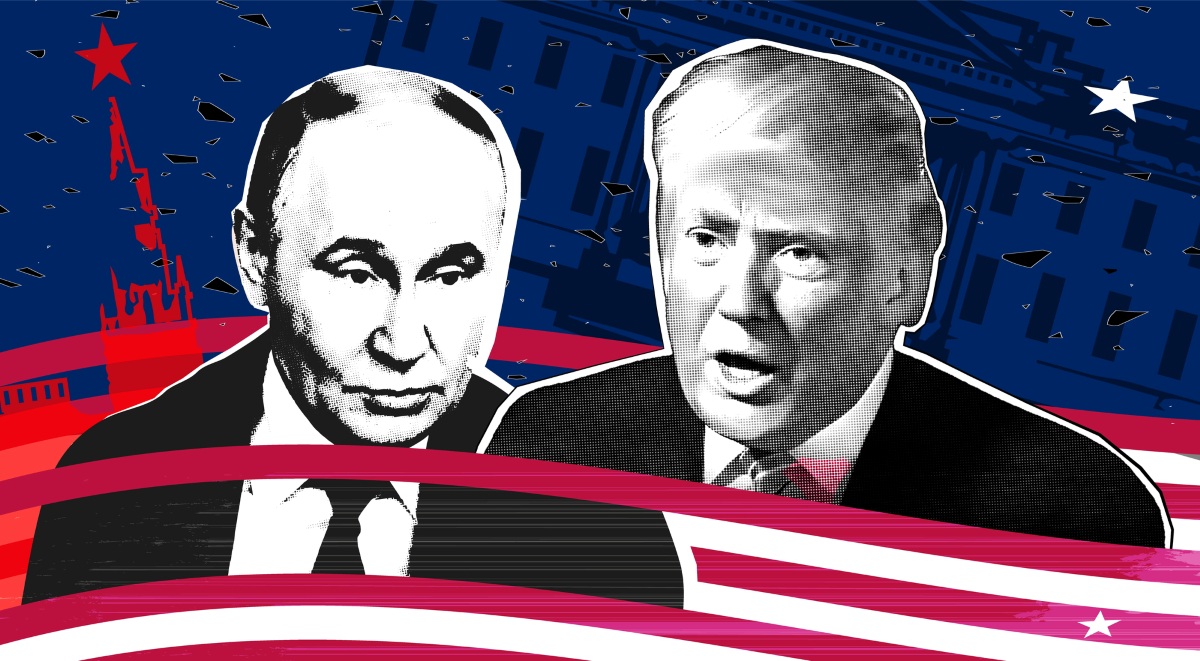
Picture a ballroom at Trump National Doral in Miami on July 27, 2016. Donald Trump is a candidate, not a president, and he’s holding a press conference in front of a wall of television cameras. About thirteen minutes in, he looks at those cameras and asks a foreign adversary for help: “Russia, if you’re listening, I hope you’re able to find the 30,000 emails that are missing.” According to the federal indictment of twelve Russian military intelligence officers, on or about that same day, after hours, Russian hackers targeted email accounts used by Hillary Clinton’s personal office for the first time. The indictment doesn’t call that a coincidence or anything else. It just gives you the date.
Hold that ballroom in your mind, because this week the United States government sent an invitation with that same address on it.
The Invitation Rubio Announced At The UN
On Wednesday, Secretary of State Marco Rubio met with Russian Foreign Minister Sergey Lavrov on the sidelines of the UN General Assembly in New York, then walked out and made the invitation official. “We’ve invited President Putin to the G20,” Rubio told reporters, adding that the administration hopes he accepts. The summit runs December 14 and 15 at Trump National Doral, the golf resort Donald Trump owns.
It’s worth being precise about what’s on offer here. Putin hasn’t attended a G20 summit in person since 2019, and he hasn’t set foot in the lower 48 states since September 2015, back when Barack Obama was president. Trump is personally offering to end that isolation while Putin’s war on Ukraine grinds into a fifth year.
The Kremlin, through spokesman Dmitry Peskov, called itself “grateful and appreciative” and said a decision would come through diplomatic channels. Bloomberg has reported that Putin is leaning toward skipping Miami in favor of a trip to China. Volodymyr Zelensky, for his part, has said he’s ready to meet Putin at the summit if he shows. And none of this was an impulse. The White House trailed the invitation back in April, when Trump himself admitted, “I doubt he’d come, to be honest with you.”
Five Days After Signing Sanctions
Now line up the calendar. On Friday, September 18, Trump signed the Lindsey Graham sanctions law, the Lindsey O. Graham Sanctioning Russia and Iran Act of 2026, named for the senator who championed it before his death in July. It passed the Senate 86 to 11 and the House 262 to 159, and it lets the president impose tariffs of up to 100% on the biggest buyers of Russian oil and gas. Zelensky publicly thanked Trump for signing it.
Five days later came the invitation. Democrats on the House Foreign Affairs Committee pointed out the gap within hours, arguing that the invitation makes clear this administration has no real intention of isolating Russia over its war. I’m not going to tell you what’s in anyone’s heart. I’m just going to keep putting the two dates next to each other, because the paper says one thing and the welcome mat says another.
The Venue Is Not A Detail
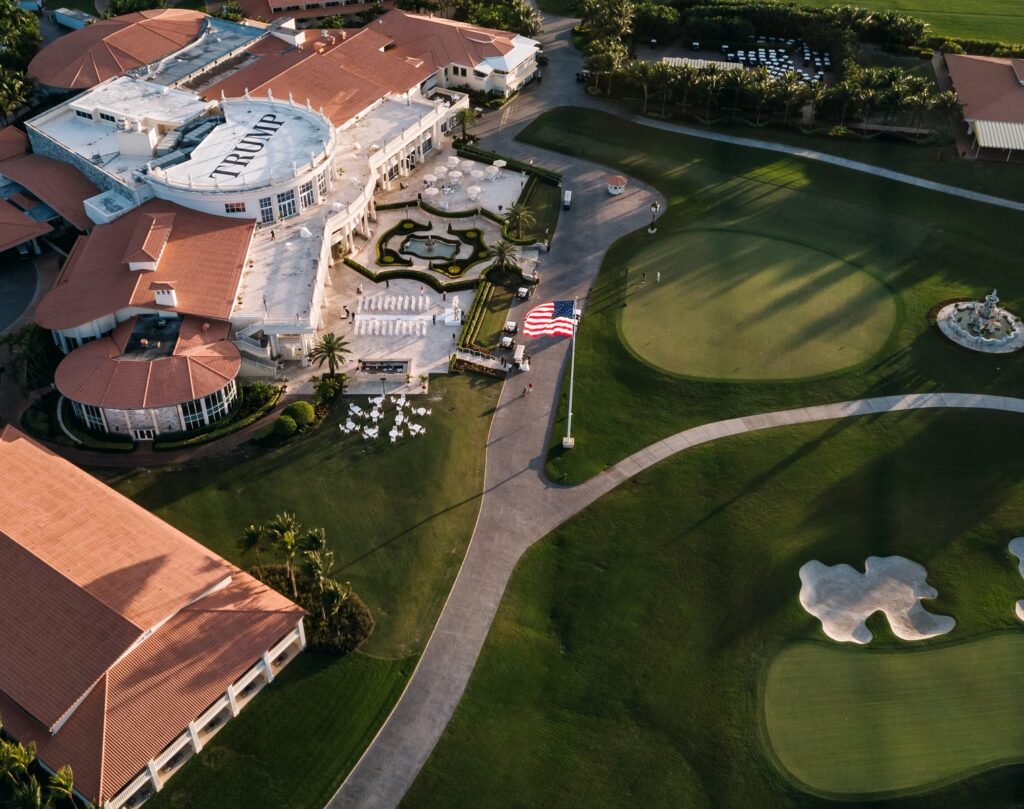
The G20 is happening at a property the sitting president owns, where the hotel rooms, the catering, and the contracts all run through his family’s business. The White House has said the resort will host the summit at cost and take no profit from the State Department or foreign governments. You can decide how much comfort that gives you, because we’ve seen this movie before.
In August 2019, at the G7 in France, Trump floated holding the next summit at Doral and said he would certainly invite Putin as a special guest. That October, his chief of staff Mick Mulvaney announced it from the White House podium, calling Doral “far and away the best physical facility.” The backlash came from both parties, ethics lawyers said it collided with the Constitution’s emoluments clause, and within two days Trump backed down, blaming the media and Democrats. This time there was no backing down. He announced the summit for his own resort, watchdog groups filed public records requests asking how his property got picked, and the summit stayed put. It fits a pattern we’ve covered from the ballroom to the arch, of government business folding neatly into the Trump brand. The thing he was too embarrassed to do in his first term, he’s simply doing in his second, special guest included.
A Relationship The Record Already Documented
The invitation only makes sense inside a relationship that runs back decades. Trump chased Moscow deals starting in 1987. In 2008, Donald Trump Jr. told a real estate conference that Russians made up a disproportionate share of the family’s assets, the same year a Russian oligarch paid $95 million for a Palm Beach mansion Trump had bought for about $41 million. In 2013, Trump brought Miss Universe to Moscow and mused about Putin becoming his new best friend. While running for president and telling voters he had nothing to do with Russia, his company secretly negotiated a Trump Tower Moscow deal, and Michael Cohen later went to prison in part for lying to Congress about it.
Then came 2016. Trump’s son, son in law, and campaign chairman took a Trump Tower meeting after being promised Russian government dirt on Clinton, and Don Jr. replied in writing, “If it’s what you say I love it.” Campaign chairman Paul Manafort handed internal polling data and battleground strategy to Konstantin Kilimnik, a man the Senate Intelligence Committee later identified as a Russian intelligence officer. That committee, run by Republicans, concluded in a nearly 1,000 page report that Manafort’s conduct represented a “grave counterintelligence threat.” Its acting chairman said the panel found irrefutable evidence of Russian meddling. His name was Marco Rubio. The senator who signed that report is the secretary who delivered Wednesday’s invitation.
The record of Trump’s presidency runs the same direction. He stood next to Putin in Helsinki in 2018 and said, “I don’t see any reason why it would be” Russia. He confiscated his own interpreter’s notes after their first meeting in Hamburg and left no full American record of five encounters. At the G20 in Osaka in 2019, he grinned at Putin and joked about election meddling. And when the Mueller investigation ended with 34 people charged and his associates convicted or pleading guilty, Trump pardoned Flynn, Manafort, and Stone.
The Second Term Ran Both Tracks
When Putin launched his full invasion of Ukraine in 2022, Trump called the opening moves genius and savvy. Back in office, his administration voted with Russia at the United Nations against a resolution condemning the invasion, rolled out a literal red carpet in Alaska for a summit that required Treasury sanctions exemptions just to happen, announced and then canceled a second summit in Budapest, and produced a peace plan European allies said read like a list of Kremlin demands. At the same time, his intelligence director accused the Obama administration of a treasonous conspiracy for investigating any of it, and his Justice Department indicted James Comey, using a personally chosen prosecutor after the career US attorney was pushed out. A federal judge threw that case out, ruling the prosecutor had been unlawfully serving in the role, and the department is still appealing.
So watch what happens on December 14 and 15. Watch whether the man at the center of a decade of investigations walks through the front door of the president’s resort, watch which government suspends which rules to make it comfortable, and watch whose business the money moves through. The sanctions are the paper. The red carpet is the policy. Accountability starts with refusing to look away from the address on the invitation.