

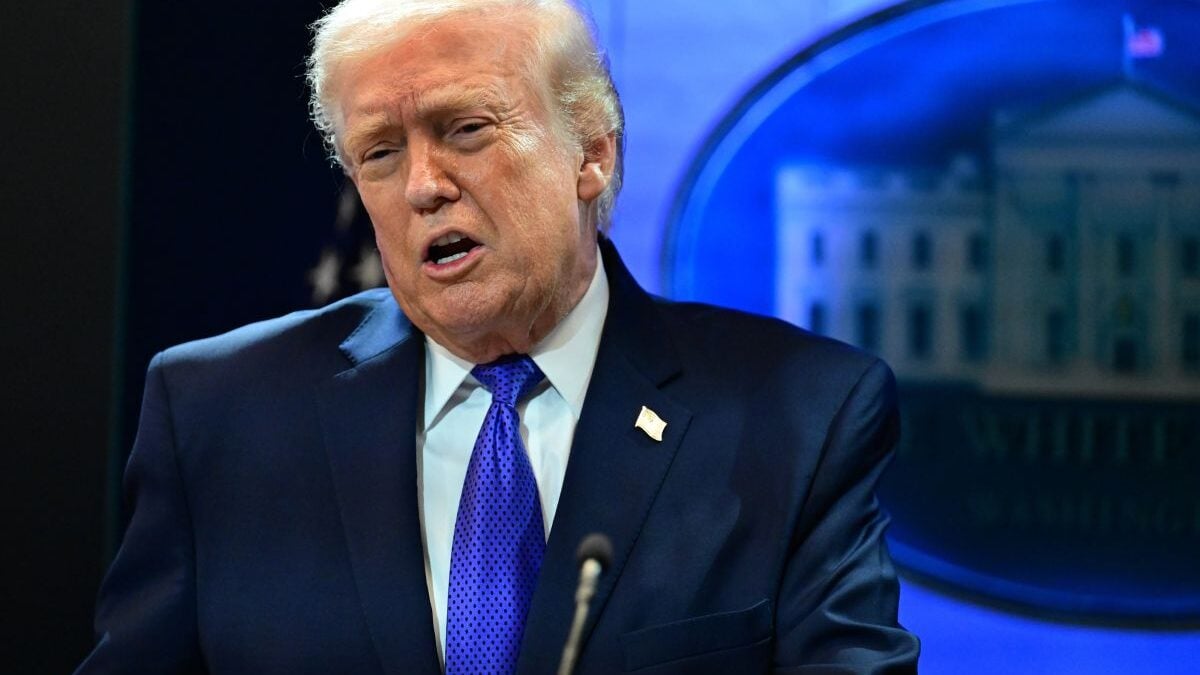
A top Republican advisor working on federal races across the country told Axios on Friday that the party’s chances this November sit somewhere between “shitabulous and craptastic.” The same advisor said the environment already looks worse than 2018 and that Donald Trump is heading toward Bush 2006 levels.
Those comparisons deserve a translation. In 2006, George W. Bush’s Republicans lost 30 House seats, 6 Senate seats, and control of both chambers of Congress in a single night. In 2018, Democrats took 40 House seats away from Trump in his first midterm. The people paid to win Republican campaigns are now debating which of those disasters is the better match for what’s coming.
Five weeks from the November 3 elections, the public numbers say they aren’t exaggerating. Trump is sitting at the lowest approval of his political life, Democrats lead the generic ballot by double digits in poll after poll, voters have spent a full year flipping seats in special elections, and sitting Republican members of Congress are privately predicting their own defeat.
Trump’s Numbers Have Never Been This Bad
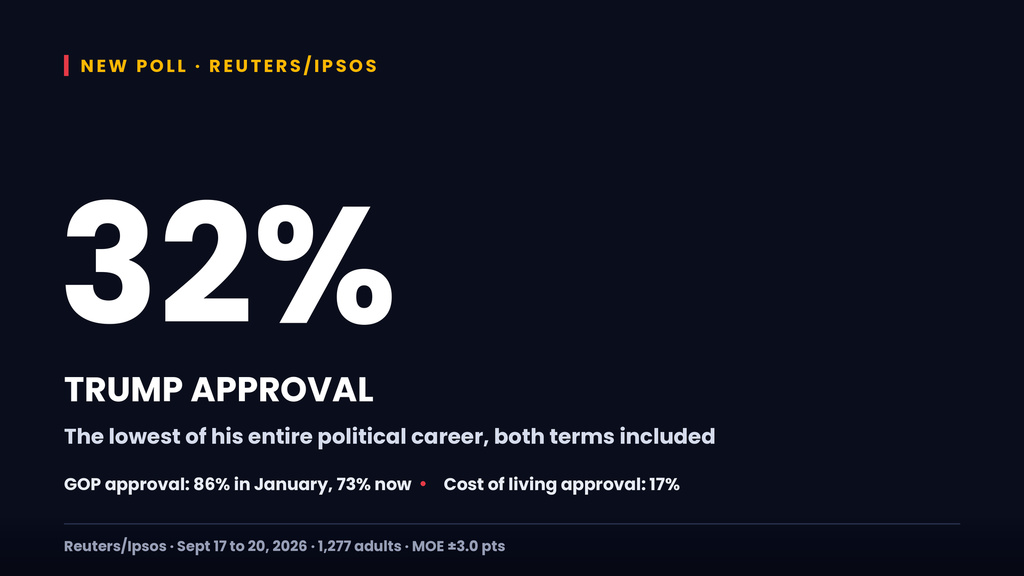
A Reuters and Ipsos survey released this week put Trump at 32%, the lowest approval of his career across both of his terms. The erosion is coming from inside the house. Approval among Republicans has fallen from 86% in January to 73% now.
The cost of living is doing most of the damage. Just 17% of Americans approve of Trump’s handling of it, and for the first time in that poll, more Republicans disapprove of his cost of living record than approve, 51% to 44%. VoteHub’s polling average now has his disapproval at 60.4%, the worst mark of either term, including the days after January 6. NBC News reported Friday that its own polling average shows Democrats with their biggest congressional lead of the cycle while Trump’s approval among Republicans keeps sliding.
The causes aren’t mysterious. Reuters notes that Trump won in 2024 promising to reduce inflation and keep America out of costly foreign wars, then launched a war on Iran in February that has pushed gasoline and diesel prices sharply higher. AAA data shows regular gas at $4.31 a gallon, up from $3.18 a year ago, with diesel at a record $6.20. Bureau of Labor Statistics data shows ground beef climbing from $6.32 a pound last September to $6.89 now.
Democrats Lead By Double Digits Everywhere Pollsters Look
Emerson College’s new national survey gives Democrats an 11 point lead among likely voters, 53% to 42%. Emerson polling director Spencer Kimball called the generic ballot the metric to watch for gauging “the magnitude of a potential Democratic wave.”
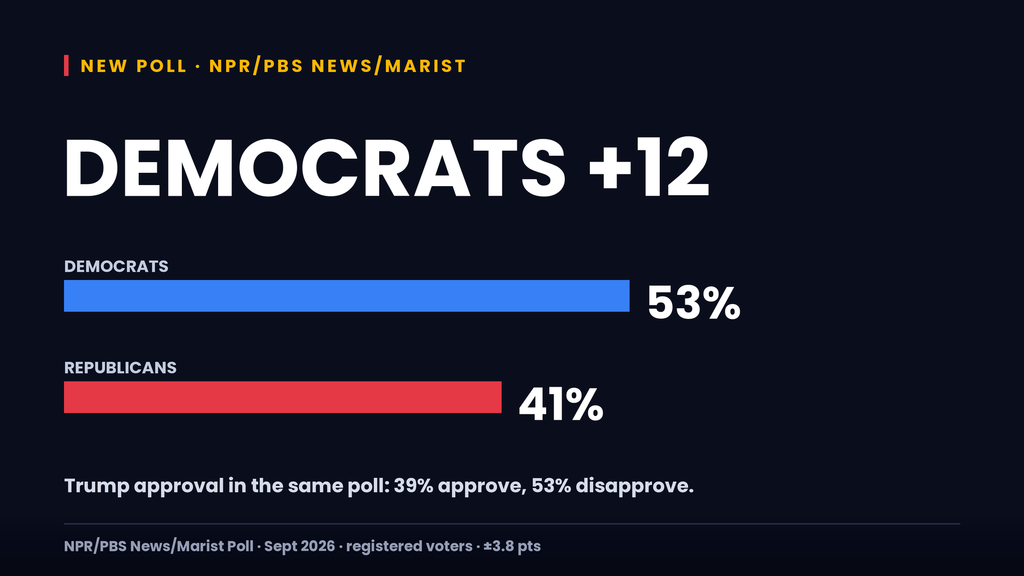
He has company. The NPR, PBS News, and Marist poll has Democrats up 53% to 41%. Marquette Law School has them up 13 among likely voters. The Economist and YouGov have them up 14. Nate Silver’s polling average sits at Democrats plus 8.1, the party’s high point for the entire cycle, up from plus 6.7 at the start of September.
The composition of those leads should scare Republicans more than the toplines. Independents back Democrats 60% to 31% in Emerson’s survey. Hispanic voters, who swung toward Trump in 2024, now back Democrats 64% to 31%. Voters who name the economy as their top issue, the same voters who powered the Republican ticket two years ago, prefer Democrats 55% to 41%. And 71% of likely voters say they’re very excited to cast a ballot.
Voters Have Already Flipped 31 Seats
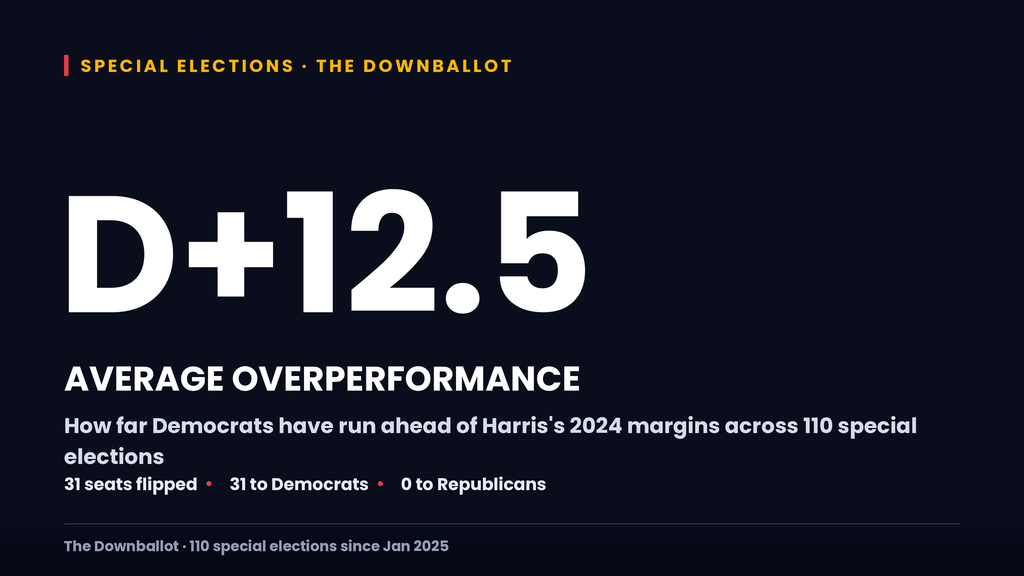
None of this is theoretical, because Americans have been voting all year. The Downballot has tracked 110 special elections since Trump returned to the White House, and Democrats have outrun Kamala Harris’s 2024 margins in them by an average of 12.5 points. All 31 legislative flips this cycle have gone to Democrats, with Republicans flipping zero, including a Texas state senate district Trump carried by 17 points.
The professional forecasters caught up on Friday. The Cook Political Report moved 15 House race ratings toward Democrats in a single day under a headline declaring the GOP on track to lose its House majority. Democrats need a net gain of 3 seats.
Senate Republicans Are Playing Defense In Trump Country
TIME reported this week that NRSC chair Tim Scott gathered Senate Republicans behind closed doors, told them 2026 will look nothing like 2024, and urged incumbents to run like they’re already behind. Per someone in the room, Scott laid out an almost entirely defensive map built around saving Republican seats in Texas, Iowa, Maine, and Alaska. North Carolina and Georgia, the two Democratic seats Republicans spent a year promising to flip, were missing from the plan entirely, and TIME reports outside GOP groups are now pouring money into Nebraska and Kansas as the mood inside the party turns fatalistic.
Texas shows why. The seat Republicans are spending to save belongs to Ken Paxton, who has six hours of sealed fraud testimony hanging over his race against James Talarico. Democrats need 4 flips to take the chamber.
House Republicans are somehow blunter. One member told MS NOW this has become “a gasoline and ground beef election,” pointing to $9 a pound ground beef and diesel running $6.50 to $7.50 in his district, and admitted his own party is getting hammered by it. Another told the outlet Republicans are going to get crushed and the only open question is by how much. A third said any Republican who isn’t worried right now is stupid.
The Party’s Whole Plan Is The Man At 32%
The official response to all of this is remarkable. RNC chair Joe Gruters told Fox News that Republicans will defy history because “our secret weapon is President Trump.” On the same network, James Carville predicted a wipeout of 25 seats at minimum, possibly 45, with the Senate likely falling too.
Trump himself stood on stage at the party’s Dallas convention this month and urged Republican voters to pretend he’s on the ballot in November, as NPR affiliates reported at the time. He also promised every adult a $5,000 dividend check if Republicans keep Congress. Reuters and Ipsos polled the promise, and 63% of Americans disapproved of it, including roughly 4 in 10 Republicans.
Republicans in Washington can read the same polls everyone else can. The question between now and November 3 is how many of them keep lashing themselves to a president at 32%, and how many start running for the exits. Democratic Reporter will be tracking both, race by race, all the way to election night.